My Business in Palm Beach County Is Changing. What Should I Do With My Commercial Space?
Whether your lease is coming due, your business is winding down, or you need more space to grow, one question always follows: what do I do with my commercial real estate?
It is the same trigger, three different situations. And each one demands a different answer.
Over the past decade I have helped clients navigate all three — a Palm Beach County business owner who spent 45 years building something and needed to walk away cleanly, an operator in Miami who needed more room to grow, and owners across South Florida who are sitting with a lease renewal notice on their desk and no clear answer yet.
Here is how each situation works and what the decision usually comes down to.
Situation 1: Your Business Is Winding Down
The question: I own my building and I am ready to stop operating. Should I sell now or wait?
The most important variable is whether you sell occupied or vacant. Most owners assume vacant is the problem. In retail and industrial owner-user properties, the reality is more nuanced.
For a single-tenant building where you are the only occupant, a buyer purchasing your property is buying the real estate — not the income. They are likely an owner-user themselves, an investor repositioning the asset, or a developer. None of those buyers require you to stay. In many cases, vacant delivery is cleaner and closes faster.
The owner of Bedding Barn had operated out of two properties for decades — 2063 Palm Beach Lakes Boulevard in West Palm Beach since 1978 and 2727 West Hillsboro Boulevard in Deerfield Beach since 1988. Both buildings were owned outright. When the time came to wind down the business, the real estate decision was straightforward in concept but required precise execution in practice.
We sold 2727 West Hillsboro Boulevard in Deerfield Beach for $1.5 million to a private buyer with no contingencies and provided certainty of close. We sold 2063 Palm Beach Lakes Boulevard in West Palm Beach for $3.5 million — all cash, with a 7-day inspection period and a 60-day close. That number came in 15% above the next highest offer we received.
Total proceeds across both properties: $5 million.
Both sold vacant. Both closed efficiently. The key was positioning each asset to the right buyer.
The lesson: If you own your building and your business is winding down, the question is not whether to sell. The question is how to position the asset and who the right buyer is. In this case, the owner continued operating Bedding Barn through the close of escrow on both properties. He never carried a building without income coming in. That timing was not accidental — it was part of the strategy. Waiting until the business is fully closed and the building has been sitting dark for months is rarely the right answer.
Situation 2: Your Business Is Expanding
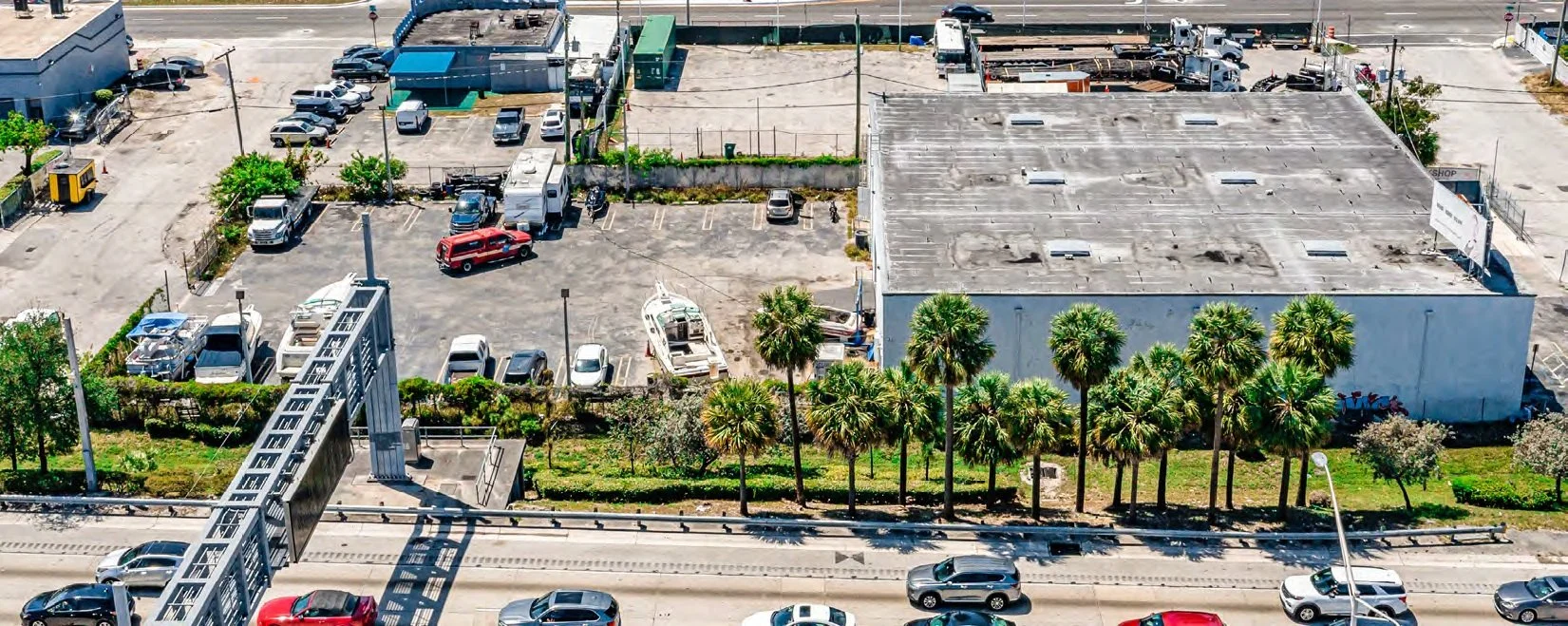
670 Northwest 113th Street , Miami - Vacant Warehouse sold for expanding business owner. Represented by Nick McAndrew, Marcus & Millichap.
The question: We have outgrown our current space. Do we lease something larger or buy?
The case for buying is straightforward: every month you write a rent check, you are building equity for someone else. When you own, that same payment begins working for you. In a market like South Florida — where industrial and flex space has seen sustained demand across Palm Beach County, Broward County, and Miami-Dade County — the cost of waiting to buy has been real.
Previously, I helped a client acquire a vacant warehouse and storage yard in Miami for $2.25 million. The business needed room to expand its mold remediation operations — additional warehouse space and an outdoor storage yard for equipment. Leasing comparable space was possible but offered no path to ownership and no protection against future rent increases in a tight Miami-Dade market.
The acquisition gave them control over their occupancy costs, the space they needed to grow, and an asset on their balance sheet.
The lesson: When a business is growing, the instinct is to move fast and lease. That urgency is understandable. But if you have the financial position to buy, the long-term math almost always favors ownership — especially in South Florida markets where available inventory for owner-users remains constrained. Working with the right agent helps maintain speed while making the most informed decision.
Situation 3: Your Lease Is Coming Due and You Are Not Sure Yet
The question: My landlord sent me a renewal notice. I am not sure if I want to renew, relocate, or do something else entirely.
This is the situation where most business owners do nothing — and that inaction is often the most expensive decision they make.
A lease expiration is leverage. It is the one moment in the landlord-tenant relationship where you hold a meaningful card. A landlord who loses a tenant faces vacancy, carrying costs, and the expense of re-leasing. That dynamic gives you negotiating room that disappears the moment you sign a renewal.
Before you respond to a renewal notice, it is worth understanding three things:
What is the current market rent for comparable space in your submarket? In West Palm Beach, Delary, Boca Raton, Fort Lauderdale, and Miami, retail and industrial rents have moved significantly over the past three years. You may be at market, above market, or — in some cases — below market, which changes your strategy entirely.
Do buildings like yours sell, and at what price? If you have been considering buying rather than leasing, a lease expiration is the right moment to run that analysis. The numbers may surprise you.
What would a qualified buyer pay for your landlord's building? Understanding the investment market gives you context that most tenants never have.
These are not complicated questions. They are the questions a commercial real estate advisor should be able to answer for you in one conversation.
The Common Thread
Whether you are winding down, expanding, or sitting with a renewal notice, the underlying decision is the same: you need accurate market information before you can make a confident choice.
The owner of Bedding Barn knew his buildings had value. Knowing exactly what that value was — and who the right buyers were — is what produced $5 million in proceeds across two counties.
The expanding operator in Miami knew they needed more space. Knowing the acquisition market well enough to move on the right property at the right price is what turned a leasing decision into an ownership position.
The business owner staring at a renewal notice has leverage they do not know how to use. That is where the conversation starts.
Frequently Asked Questions
I received an unsolicited offer on my property. Should I take it?
Maybe. But how would you know if you are leaving money on the table? A buyer who approaches you directly — without competition — has every incentive to offer less than your property is worth. That does not mean the offer is bad. It means you have no basis for comparison unless you know what the market would actually pay. Before responding to any unsolicited offer, get an independent valuation and understand who else might want the property. In several cases I have seen owners accept unsolicited offers that were 10 to 15 percent below what a properly run process would have produced. The offer gets you started. The process gets you paid.
Will my employees find out if I am selling my building?
This is one of the first questions every business owner asks, and it says something good about them that they ask it. The answer, when working with me, is no — not unless you choose to tell them. There is no sign in the window, and no mass marketing campaigns that land in your employees' inboxes before you are ready. Buyers are approached directly and individually, and confidentiality is a standard expectation at every stage of the process. Most owners I have worked through this with have waited until a deal was signed and the buyer was committed with a nonrefundable deposit before saying a word to their team. How and when you have that conversation is entirely your decision. The sale process does not have to make it for you.
Should I sell my commercial property before or after my business closes?
In most owner-user situations, selling while the business is still operating — or immediately after closing — produces better outcomes than waiting. A dark, vacant building raises questions for buyers. A clean, vacant building with a known operating history does not.
Is it better to buy or lease commercial space in South Florida right now?
For businesses with the financial position to buy, ownership is generally the stronger long-term decision in South Florida. Industrial and retail vacancy rates across Palm Beach County, Broward County, and Miami-Dade County remain tight, and available owner-user inventory is limited.
How do I know if my landlord's renewal offer is fair?
Compare it against current market rents for comparable space in your submarket. A commercial real estate broker with active market knowledge can tell you where you stand in one conversation.
What is an off-market commercial property transaction?
An off-market transaction is one that never appears on public listing platforms. The buyer and seller are connected directly, typically through a broker with an active network. Both of the Bedding Barn properties referenced above sold off-market.
Contact Nick McAndrew at Marcus & Millichap to discuss the current value of your commercial property or land in Palm Beach County, Broward County, or Miami-Dade County. Call or text: 561-245-0486 | marcusmillichap.com/advisors/nicholas-mcandrew | nickmcandrew.com
Nicholas A. McAndrew, known professionally as Nick McAndrew, is a Director of Investments at Marcus & Millichap serving Palm Beach County, Broward County, and Miami-Dade County.